ROI vs ROAS in PPC: What’s the difference and how should you use them?

5 min read
ROI

TLDR: ROI tells you whether you actually made any money. ROAS tells you how efficient your ad spend was. ROI includes all investment costs, ROAS focuses only on media spend. You shouldn’t swap the two, use them together for clearer marketing decisions.  

What is ROI? 

When Tom Pickard, our Head of Paid Search, sat down to chat through this topic, the first thing he said people use ROI and ROAS interchangeably and that ROI, at its heart, is simply return on investment. Sounds obvious, but the important part is what gets counted as “investment.” 

ROI is about the total amount of money invested and the return generated from that investment. Not just media spend, but everything wrapped around a campaign: agency fees, staff wages, tech costs, any additional costs, not just your media spend. This broader scope is what makes ROI such a powerful profitability metric. 

Definition of ROI 

Return on Investment (ROI) measures whether a campaign, or even the business as a whole, produced a financial profit once all associated costs are accounted for. 

Formula 

ROI = (Net Profit / Cost of Investment) × 100 

Example: Imagine you spend £10,000 on ads, £5,000 on agency fees, and £5,000 on internal staff time. Your total investment is £20,000. If your campaign generates £30,000 in profit: 

ROI = (£30,000 / £20,000) × 100 = 150% 

This tells you the campaign delivered a positive return once everything was factored in. 

One of the major upsides is that ROI should give you a final view on profitability, so you know whether you “made money or not”. The downside? It’s slower to react to. Because ROI includes so many cost factors, it’s not something you monitor minute-by-minute; instead, it’s often reviewed at the end of a campaign or financial period. 

What is ROAS? 

ROAS is “literally just the ad spend… versus the return you got for that”. It’s a much narrower view, but incredibly useful for understanding which ads or campaigns are pulling their weight. 

Definition of ROAS 

Return on Ad Spend (ROAS) measures how effectively your advertising spend turns into revenue. 

Formula 

ROAS = Revenue from ads / Cost of ads 

Example: If you spend £5,000 on ads and generate £20,000 in revenue: 

ROAS = £20,000 / £5,000 = 4.0 (or 400%) 

This means every £1 spent on ads produced £4 in sales. 

ROAS helps you see the effectiveness of the individual ad spend and identify more efficient areas within your campaigns or channels. But it’s important to remember that ROAS is only a top-line metric. It says less about profitability because it ignores hidden or indirect costs. Short-term ROAS can be easy to misinterpret if you don’t understand what’s driving it, new vs returning customers, brand vs non-brand, incrementality, and so on. 

ROI vs ROAS: Key differences 

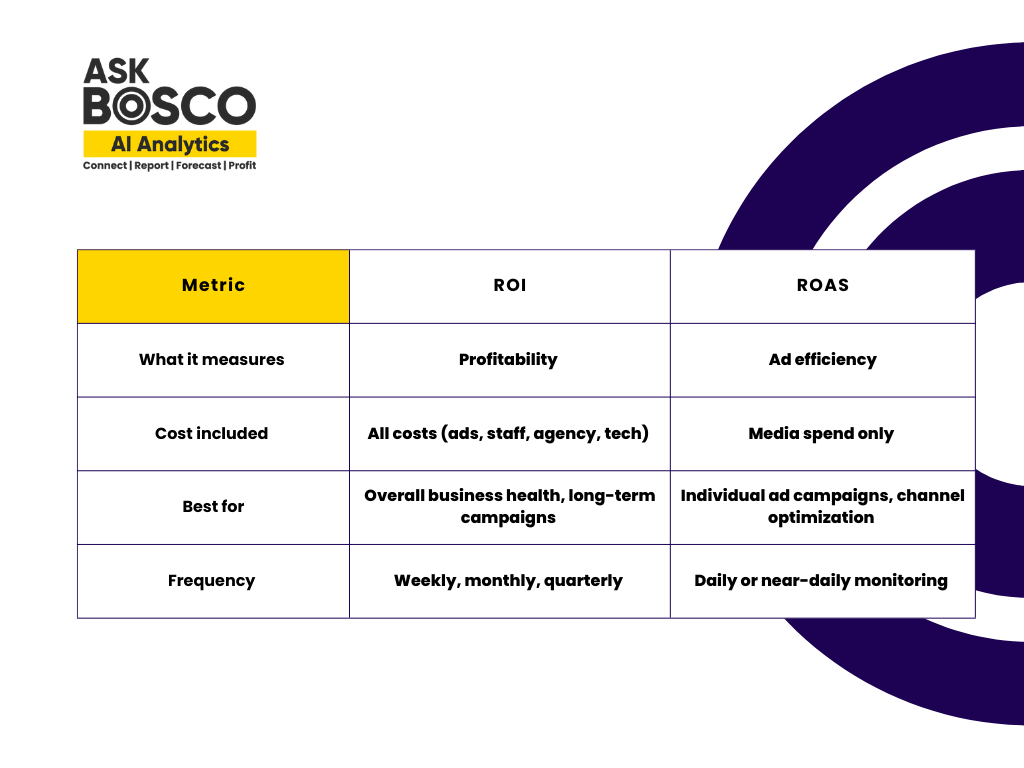
The real differences between the two are that ROI includes all invested spend, while ROAS focuses only on media spend. ROI tells you if you made a profit; ROAS tells you whether your advertising was efficient. 

Purpose 

ROI → profitability 
ROAS → advertising efficiency 

Scope

ROI → overall business or full campaign evaluation 
ROAS → specific ad campaigns or channels 

When to use each metric 

Tom recommends using ROI for longer-term large-scale campaigns involving lots of moving parts, whereas ROAS is ideal when you’re checking “day-to-day performance shifts” across paid media. 

ROI vs ROAS

How to use ROI and ROAS together 

Interestingly, ROAS is something you might look at nearly every day, whereas ROI is checked less frequently, usually at the end of a campaign, quarter, or reporting cycle. That’s because they complement each other beautifully when used together. 

You might use ROAS to optimize your daily ad performance, making quick decisions about budgets or keyword bids. Meanwhile, ROI becomes your strategic compass, helping you understand whether short-term wins actually translate into long-term profitability. 

It’s important to understand business margins because, without context, even good ROAS targets can be misleading. Agencies often default to a “what’s the average ROAS?” mindset without factoring in what this business actually needs, maximum profit, break-even growth, or somewhere in between.  

Common mistakes to avoid 

One big mistake is not having an ROI view at all. Many marketers become fixated on ROAS because it’s fast and easy to report, but that can hide the uncomfortable truth that “you’re not actually making a profit at the end of the day” if you forget to include tech fees, agency fees, or staff wages. 

Another pitfall is misinterpreting short-term ROAS. A campaign might look excellent on paper, but if it’s mostly brand traffic or returning customers, it might not be contributing meaningful growth. As Tom says, ROAS “doesn’t give you a view on total success” on its own, and you can generate a great ROAS simply by spending heavily on brand terms, even if that doesn’t genuinely help the business grow. 

Conclusion 

ROI and ROAS are not interchangeable. ROI tells you whether your marketing efforts were profitable once every cost is counted. ROAS tells you how efficiently your ad spend generated revenue. Using them together gives you a balanced, strategic, and realistic understanding of your marketing performance. 

If you want an easier way to monitor both, ASK BOSCO® pulls them into clear, actionable reports, perfect for PPC teams who want data-driven decision-making without all the spreadsheets. So which ASK BOSCO® reports help with tracking ROI and ROAS? We recommend using the Paid Search Report daily for ROAS and the overall website view report for top-level ROI. 

Author

Stay in the loop
Loading
Share post

hi

Other posts you might like

How to plan your first-party data strategy: A beginner’s guide

How to plan your first-party data strategy: A beginner’s guide

Privacy regulations and the phasing out of third-party cookies have made it more important than ever to establish a solid
Digital news to watch: AI boosts Search Console insights

Digital news to watch: AI boosts Search Console insights

In this month’s digital news, Google Search Central has rolled out a new AI-powered configuration feature within Search Console, aimed
What is content SEO?

What is content SEO?

TLDR: Content SEO is the practice of creating high-quality, search-optimized content that helps your website rank for relevant queries. It

Popular topics

[other_categories]